I almost got blown off the bike multiple times on the way home. It's actually mostly a problem when stopped since one can not compensate by turning into the wind like you could when moving.
Also wearing shorts with this kind of wind is fine except for the dirt/crap on the roads gets blown onto your legs(also face, mouth, eyes etc) at a high rate of speed, and it hurts!
We have not had enough snow/rain to clean the roads yet so while the temperature was very nice today (hit a record of 68F at Logan Airport) that wind made things a bit less enjoyable.
I will be back tomorrow with another segment in my UK canal path series, stay tuned!
Thursday, March 8, 2012

Saturday, March 3, 2012
UK Canal Path Photos: Part 4
The series continues with part 4
Part 1
Part 2
Part 3
Google Maps Link

Google Maps Link
Google Maps Link
Until next time.If you would like larger copies of any of the pictures in this series please send me an email or add a comment and I will gladly provide. All images are licensed under a Creative Commons Attribution-Noncommercial-Share Alike 3.0 Unported License -John
Part 1
Part 2
Part 3
Google Maps Link

Google Maps Link
 |
| The first marina and long term "parking" area for the narrow boats (or other craft). There are a number of these facilities along the route and typically are set up like RV parks in the US, with water, electricity, gas etc. There are also numerous short term moorings along the way, you saw one earlier before one of the locks. |
Google Maps Link
 |
| There might have been locks here at some point, but they are long gone now. |
Thursday, March 1, 2012
UK Canal Path Photos: Part 3
The series continues.
Part 1
Part 2
Google Maps Link
Google Maps Link
Google Maps Link
Until next time. If you would like larger copies of any of the pictures in this series please send me an email or add a comment and I will gladly provide. All images are licensed under a Creative Commons Attribution-Noncommercial-Share Alike 3.0 Unported License. -John
Part 1
Part 2
Google Maps Link
 |
| Second manual lock section I came to. These are operated by the maintenance staff of British Waterways. Passage is by request (with significant notice). The white truck on the hill is from British Waterways and is waiting for a boat to arrive. Note the Catenary system to the right for one of the British Rail main lines. |
Google Maps Link
 |
| If you look closely to the right of the canal you can see the mooring spots for boats waiting to go into the locks. I didn't know there were locks at this spot until I came around the corner, they were quite well hidden. |
Google Maps Link
 |
| Third lock, also operated by British Waterways. Nobody coming when this was taken though so most likely a boat was coming from the Leeds area heading north, and the worker at the previous lock would drive up here to get it ready once the boat had past. |
Tuesday, February 28, 2012
UK Canal Path Photos: Part 2
For the second in the series of canal photos from my 2009 study abroad in Leeds.
Part One
Google Maps Link
Rapeseed oil (modified into Canola in the US) is grown quite a bit in the EU for bio-diesel but also for cooking. It was grown all around Yorkshire and I was able to buy locally produced and processed rapeseed oil for cooking from some of the farmers markets in Leeds.
Google Maps Link

Google Maps Link

Part One
Google Maps Link
 |
| A very small field of what I presume is wild Rapeseed. |
Google Maps Link

Google Maps Link

Until next time, If you would like larger copies of any of the pictures in this series please send me an email or add a comment and I will gladly provide. All images are licensed under a Creative Commons Attribution-Noncommercial-Share Alike 3.0 Unported License. -John
Sunday, February 26, 2012
The first in a planned series: UK Canal Path Photos
As I slowly work back into putting up a couple posts a week I want to start out with the basics of some of my most popular posts over the past couple years. That of Photography of Infrastructure.
Now as writing a huge piece (blog wise) for each set of images and taking you through the area being featured is quite a bit of writing and research and still a bit much for me at the moment, I will instead feature a photograph every couple days or so that is part of a larger trip or series.
On some of them I will add a few notes and I will try to get Google maps links for the approximate location in case you are visiting the area and wish to see more.
I will start out with some of my more enjoyable trips in the UK (ok pretty much all of them were enjoyable, even my commute to the university if you didn't mind playing leapfrog with the buses and lorries or getting squeezed at the intersections when the bike-lane became way too narrow)
Lets start out with a trip I took to the town of Saltaire a UNESCO World Heritage Site, just north west of Leeds in Yorkshire England. I took this trip at the end of May in 2009. Enjoy.
Starting out:
Leeds (Kirkstall) 10:22am
Google Maps Link

Google Maps Link
Until next time, If you would like larger copies of any of the pictures in this series please send me an email or add a comment and I will gladly provide. All images are licensed under a Creative Commons Attribution-Noncommercial-Share Alike 3.0 Unported License. -John
Now as writing a huge piece (blog wise) for each set of images and taking you through the area being featured is quite a bit of writing and research and still a bit much for me at the moment, I will instead feature a photograph every couple days or so that is part of a larger trip or series.
On some of them I will add a few notes and I will try to get Google maps links for the approximate location in case you are visiting the area and wish to see more.
I will start out with some of my more enjoyable trips in the UK (ok pretty much all of them were enjoyable, even my commute to the university if you didn't mind playing leapfrog with the buses and lorries or getting squeezed at the intersections when the bike-lane became way too narrow)
Lets start out with a trip I took to the town of Saltaire a UNESCO World Heritage Site, just north west of Leeds in Yorkshire England. I took this trip at the end of May in 2009. Enjoy.
Starting out:
Leeds (Kirkstall) 10:22am
Google Maps Link
 |
| Note the helmet which I did not wear for the entire trip. |

Google Maps Link
 |
| The first of many manual locks I would see on this trip. The Canal is active as you will see later. |
Until next time, If you would like larger copies of any of the pictures in this series please send me an email or add a comment and I will gladly provide. All images are licensed under a Creative Commons Attribution-Noncommercial-Share Alike 3.0 Unported License. -John
Friday, February 24, 2012
Guerrillas in the City (no not those Gorillas)
Apologies for the long time between posts. I have been busy as usual. None the less I do hope to update more often and will be starting slowly with one or two posts a week and work forward from there. Here is a great Friday article I came across earlier this week.
This comes from the folks at CityFabric (check out their cool city map based shirts!!!)
These are simple way-finding signs placed in a couple neighborhoods in Raleigh North Carolina (a somewhat unlikely place you might think)
The effort was picked up by the Atlantic Cities and by the BBC but I have yet to see it come up on my blog feed (which is quite surprising!)
The BBC link has a video attached which is a nice combination with the print articles on this effort.
Read the newraleigh.com article here (or click the picture)
The Facebook page for this effort is here
This is exactly what we need in many communities; simple, stylish, and cheap. It gets the point across and gives folks quick information in a way that they can understand. (the little QR code links to a Google map with walking directions to whatever destination is mentioned on the sign)
No this is not a good long term solution but it was clearly enough to get the attention of the city and international media to such an extent that the city is now looking at making and expanding these signs (albeit in a more code compliant way).
There are quite a lot of people that want to help make their city or town better. However, I feel that many local governments are stuck in a format of engagement that does not bring many people on-board with a program or truly allow good discussion. Cities and communities need to work harder to identify needs and work with needs that the community has identified as well. Our cities and towns can be stronger than they are now, and must be. It is people power pure and simple, but it needs to be tapped properly.
Even the City of Cambridge, MA (where I work) can do a better job (actually they are doing a better job and are adopting some new outreach techniques I helped develop in the grant program I coordinate).
Lets have more guerrilla signs for walking, biking, transit. More guerrilla gardening and knitting. These things are helpful and make our community better. They make us smile and think about what a great idea that is. They may not be legal and may only last a couple weeks but sometimes that is enough.
Lets have more engagement with the community that we live in, sometimes it only takes one or two people to get the ball rolling.
This comes from the folks at CityFabric (check out their cool city map based shirts!!!)
 |
| Image from newraleigh.com |
The effort was picked up by the Atlantic Cities and by the BBC but I have yet to see it come up on my blog feed (which is quite surprising!)
The BBC link has a video attached which is a nice combination with the print articles on this effort.
Read the newraleigh.com article here (or click the picture)
The Facebook page for this effort is here
This is exactly what we need in many communities; simple, stylish, and cheap. It gets the point across and gives folks quick information in a way that they can understand. (the little QR code links to a Google map with walking directions to whatever destination is mentioned on the sign)
No this is not a good long term solution but it was clearly enough to get the attention of the city and international media to such an extent that the city is now looking at making and expanding these signs (albeit in a more code compliant way).
There are quite a lot of people that want to help make their city or town better. However, I feel that many local governments are stuck in a format of engagement that does not bring many people on-board with a program or truly allow good discussion. Cities and communities need to work harder to identify needs and work with needs that the community has identified as well. Our cities and towns can be stronger than they are now, and must be. It is people power pure and simple, but it needs to be tapped properly.
Even the City of Cambridge, MA (where I work) can do a better job (actually they are doing a better job and are adopting some new outreach techniques I helped develop in the grant program I coordinate).
Lets have more guerrilla signs for walking, biking, transit. More guerrilla gardening and knitting. These things are helpful and make our community better. They make us smile and think about what a great idea that is. They may not be legal and may only last a couple weeks but sometimes that is enough.
Lets have more engagement with the community that we live in, sometimes it only takes one or two people to get the ball rolling.
Saturday, December 31, 2011
Have a safe and happy New Year!
If you are out in about in any form of transportation, foot, car, bike, bus etc this evening. watch where you are going and be aware. Lots of celebrations going on and some folks might not be as aware as they are suppose to be. Ride safe, ride happy!
Have a safe and sustainable transportation friendly new year :)
Have a safe and sustainable transportation friendly new year :)
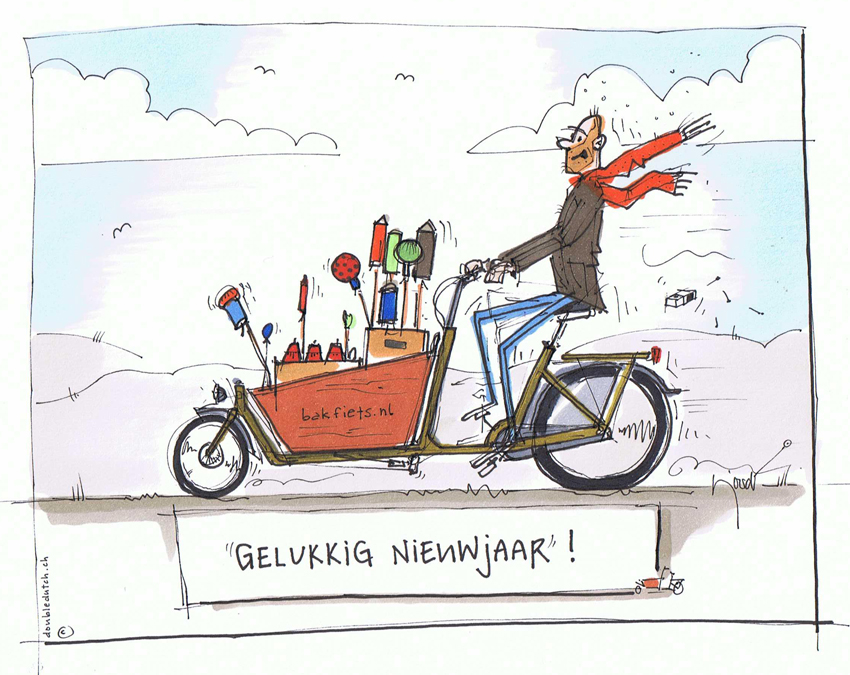 |
| Happy New Year in Dutch http://www.bakfiets-en-meer.nl |
MIT Helmet Vending Machines
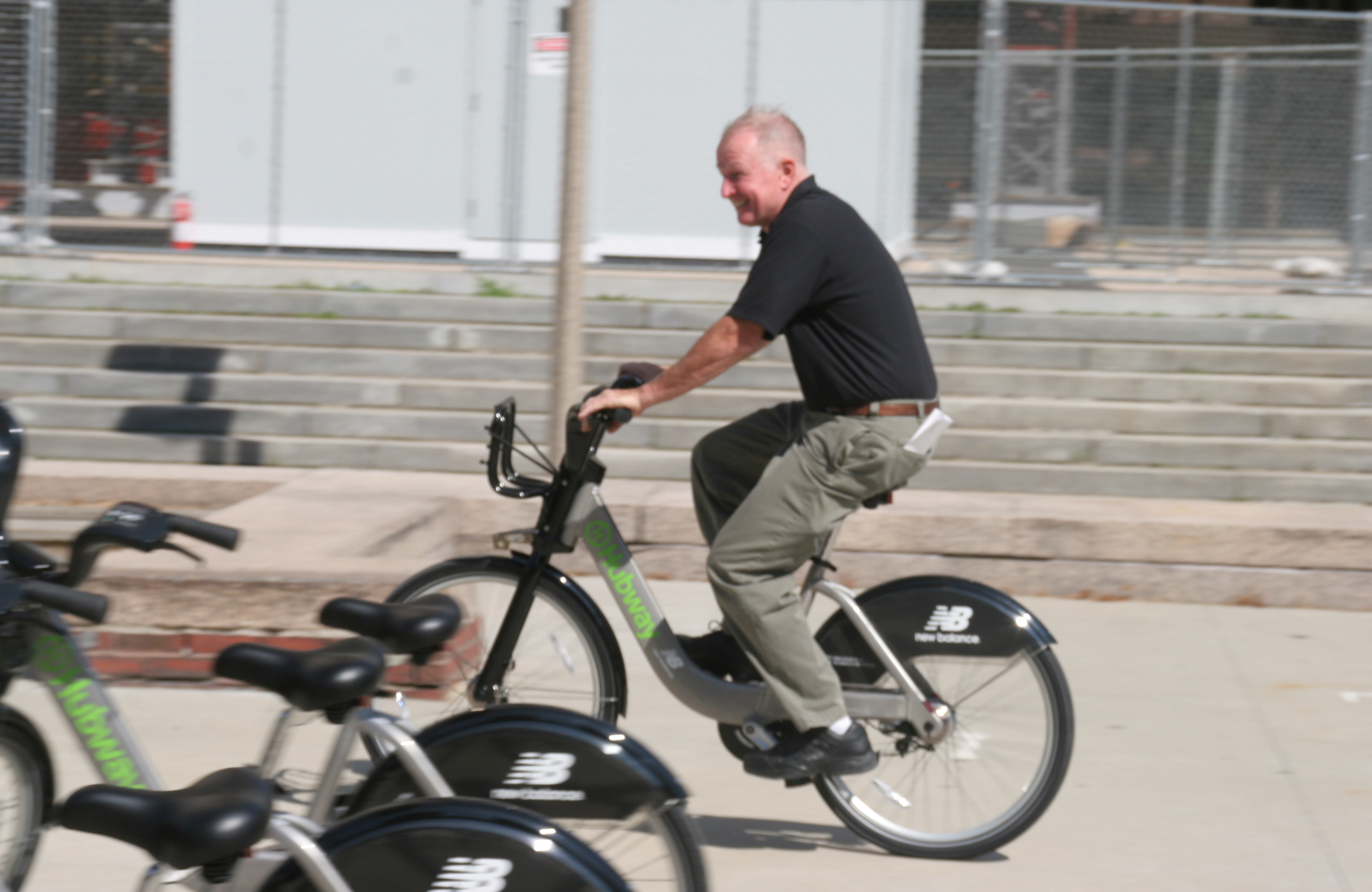 |
| bostonbiker.org...hubway-guy |
That is the point, zero problems despite a low helmet usage statistic. It is believed that typical users are folks that are likely to take less risks, and certainly they are traveling at a much slower speed (these are big and heavy 3 speeds, you cant get going to terribly fast on them). On the flip side they may be less use to the traffic laws especially if they use to walk and now use the bikes, and they may be from other countries where the laws for bicycle are significantly different.
Lets get back to the article, a good idea for sure, but so far it would not matter if more folks were wearing helmets, there were no problems. Now from Montreal where the system is much more robust and they have better infrastructure, there have occasionally been issues and there are a couple reports of doctors stating the need for the city to fund some type of vending machine (such as this) or partner with shops for discounted helmets (what Hubway does currently). However, they have provided little information other than they see more cyclists in the emergency room for injuries. When pressed there seems to be little evidence of injuries that could have been prevented with use of a helmet. This article (in french) talks about a crash that while serious, would not have been less serious for the bixi user if she were wearing a helmet. Most injuries were in her legs in this case, and it was the fault of a motorist running a red light that was the problem, not the bixi user. It ends with a call for more and safer infrastructure, which is the appropriate response. (another blog entry in English with a couple different articles linked)
However the one thing we do know is that more bikes on the road means; a lower injury rate, the more people biking the safer everybody is. We also know the health benefits of cycling (even if they breath in more pollution than other users) are a net benefit. These two elements have been studied quite a bit and the data is there proving that both benefits are true. Helmet usage is really a bit of a mixed bag, especially since they are only good in certain crashes and in very specific types they can potentially cause more injuries (rotational specifically).
In conclusion, good invention that will be beneficial in areas with mandatory helmet laws (which btw have a huge negative impact on bike share, a new study for Sydney, AU notes that 22% of folks surveyed would ride or ride more often without the mandatory helmet law, and bikeshare has struggled to get off the ground with successes everywhere else) and could be beneficial to folks that do not feel safe using a bike without a helmet. If it gets somebody on a bike good.
 |
| copenhagenize.com...motoring-helmets |
I do not use a helmet when I am using bikeshare, they simply do not go together at all. In Montreal or in Boston (the two systems I have used). I do wear one while on my personal European style city bike (Breezer uptown 8), but mainly that is out of professionalism since I work for the City of Cambridge in the Environment and Transportation division, and I could see the news now... I also tend to travel a bit faster on my personal bike.
Bikeshare and helmets do not go together and while they should be available, the top cycling countries and cities never have mandatory laws nor do they have high helmet usage. Despite what it may seem, people in those countries are not dying in droves or have massive head injuries because of the lack of helmets (although there is a small percentage of older Dutch that have issues with head injuries due to a variety of reasons). It is safe to bicycle in Denmark, the Netherlands, and Japan because of the built infrastructure.
 |
| Something a little more like this. |
Sunday, November 20, 2011
Banana CousCous, An Unlikely Combination
 |
This recipe was a bit of a combination of online resources. It started out with the idea to use up some ripening bananas, I originally thought of some main dish similar to cooked plantains but ended up going with the whole wheat couscous and a sweeter dish instead.
This will work for for a breakfast porridge type or closer to a rice pudding for desert and is an adaptation from bethmichelle.com among others. The key here is that this does not use a microwave.
Cooking a meal fresh in the microwave is, well, idk but it's not good!

As always the following is just approximate and is an adaptation itself, please experiment and adapt where appropriate. Substituting your favorite soy/nut/coconut milk instead of whole is one such yummy adaptation.
Ingredients:
2 1/4 cup whole milk (I like MOO milk especially but Organic Valley is also a great choice) 1 cup whole wheat couscous (buy in bulk if possible, but packaged should work ok) ~8 cardamon pods (break open and grind the seeds, use 1-3 more if pods are older, dried can work too) 2 pinches of cinnamon 1/4 tsp sea salt (use coarse crystals and grind with cardamon for best result) 1/2 cup brown sugar (use less if you do not have a strong sweet tooth, white sugar will work too, just use less) 2 ripe bananas, sliced Orange rind (scrape as much or little as you like but not more than 2 teaspoons) Optional: 1tsp vanilla/banana extract Fresh fruit for topping Ground chocolate for topping (Taza Chocolate works great if you can get it) |

Combine milk and sugar and heat on medium-high in a wide saucepan, stirring frequently until just boiling. Turn down heat, adding salt, spices, orange rind, and couscous stir and simmer for 30 seconds or so. Remove from heat and let sit until thick. Add extra milk as needed and fluff with sliced bananas. Add fruit or chocolate and serve hot or chilled.

Enjoy :)
Wednesday, November 16, 2011
Commuting with an Umbrella
It was raining today, quite heavily in fact. In an urban environment that provides very little consideration for folks using bicycles it is not a pleasant experience, especially if it is anything more than a light spring rain. 
I might argue that even with the typical built infrastructure today, it is mainly presumed that folks using it will do something else when it rains, or are really out to enjoy the ride and not actually get anywhere safely and comfortably, or are too die-hard for rain and puddles to stop them.
All of that being said, with a little coordination and picking the right streets one can ride with an umbrella even in the crazy road environment of Cambridge/Allston. My route earlier today is below, with the parts I used my umbrella in blue and the rest in light red.
 click through for the full map
As you can see of my approximately 3.5 mile urban route I can use an umbrella safely about 60% of the time (around 2.2 miles) However that is just me, I am pretty comfortable and secure with my bicycle, I have good breaks and good control. For somebody who does not use a bike often, if they tried to bike with an umbrella there is only one section where they could. A .6mi section from Western Ave to the overpass of the highway. This is so little that it is not even worth it, unless you lived along here and were going to the bank or a friends house nearby.
Mostly this is due to the road curving to the edges, where the bicycle lanes are. This is to help drain water off during especially heavy storms to make it safer for drivers. That is the key, drivers, for cyclists traveling along the curb water collects, pools and covers up the potholes that were already there. Combine this with poor roads that are barely ride-able when it is dry, cars speeding past and hopefully not splashing you, low visibility in general, and loss of braking/maneuverability, you have a very unpleasant environment.
What does riding with an umbrella have to do with it? Citizen cyclists (I believe Copenhagenize has popularized the term) should be able to ride safely while carrying an umbrella if they choose to do so.

This gets to the problem with most of the built infrastructure for bicycling in the USA. It is not designed so that it is if not pleasant, at least tolerable, to ride in the rain or any other weather condition, or any time when it is not 75 degrees in the middle of the day with little traffic and a bit of sun in May.
I might argue that even with the typical built infrastructure today, it is mainly presumed that folks using it will do something else when it rains, or are really out to enjoy the ride and not actually get anywhere safely and comfortably, or are too die-hard for rain and puddles to stop them.
All of that being said, with a little coordination and picking the right streets one can ride with an umbrella even in the crazy road environment of Cambridge/Allston. My route earlier today is below, with the parts I used my umbrella in blue and the rest in light red.
click through for the full mapAs you can see of my approximately 3.5 mile urban route I can use an umbrella safely about 60% of the time (around 2.2 miles) However that is just me, I am pretty comfortable and secure with my bicycle, I have good breaks and good control. For somebody who does not use a bike often, if they tried to bike with an umbrella there is only one section where they could. A .6mi section from Western Ave to the overpass of the highway. This is so little that it is not even worth it, unless you lived along here and were going to the bank or a friends house nearby.
The reason that would even be possible is that this is a traffic calmed road designed to be so narrow two cars can not pass each other but two bikes and a single car driving carefully can.
View Larger Map
Yes this is actually two way! This design means very limited auto traffic and what traffic there is is usually driving very carefully and slowly and typically won't even pass a bike going in the same direction, although there is room to do so safely.
In general these issues are why we need to really look at how we are designing bicycle infrastructure. No we can't design around the best rain protection possible (covered elevated paths etc.) but we should start looking at how we build roads and side-paths that can allow folks on bikes, or wheelchairs, or on foot to better enjoy getting to where they need to go even when it is raining out, or snowing, or hot or cold.
View Larger Map
Yes this is actually two way! This design means very limited auto traffic and what traffic there is is usually driving very carefully and slowly and typically won't even pass a bike going in the same direction, although there is room to do so safely.
In general these issues are why we need to really look at how we are designing bicycle infrastructure. No we can't design around the best rain protection possible (covered elevated paths etc.) but we should start looking at how we build roads and side-paths that can allow folks on bikes, or wheelchairs, or on foot to better enjoy getting to where they need to go even when it is raining out, or snowing, or hot or cold.
More thoughts on weather cycling and what other countries are doing (notably not the US) some point soon.
Subscribe to:
Posts (Atom)


 Posts
Posts